An online casino may look simple from the player’s side: choose a game, place a wager and receive the result. Behind that interface, however, sits a much larger operation involving casino managers, compliance teams, software developers, game designers, payments specialists and responsible gambling staff.
This editorial Q&A looks behind the scenes at how UK online casinos and casino games are managed, how new titles are designed and tested, and why regulation, technology and player protection increasingly influence almost every part of the industry.
🎤 More Than Games and Bonuses
Running an online casino involves far more than choosing games and promotions. Licensing, customer verification, payments, technical integrations, security, responsible gambling and regulatory compliance all operate behind the player-facing website.
For more guides covering regulation, casino operations and player protection, explore the MeganCasino Casino Blog.
What Does a Casino Manager Actually Do?
A casino manager working for an online gambling operator can be responsible for a surprisingly broad range of activities.
The role may involve coordinating commercial, technical and regulatory teams rather than personally managing every individual casino function.
Ensuring casino operations remain aligned with licensing and regulatory requirements.
Managing providers, game integrations and the casino’s overall content mix.
Working with payment, fraud and verification teams around deposits and withdrawals.
Supporting responsible gambling processes and customer interaction systems.
At larger operators, each of these areas may have its own dedicated department. Casino management then becomes partly a coordination role – balancing commercial objectives with technical limitations and regulatory obligations.
Q&A: What Is One of the Biggest Challenges in UK Casino Operations?
Q: Why is compliance such a major part of casino management?
Because a UK-facing operator cannot treat regulation as a one-time licensing exercise. Customer verification, financial crime controls, responsible gambling, advertising, complaints and game operation all require ongoing processes. Changes in regulation can therefore affect product design, marketing and customer journeys as well as dedicated compliance teams.
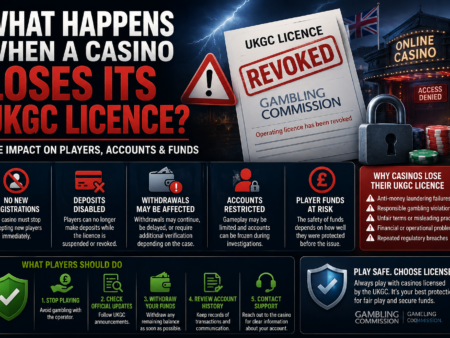
When regulatory failures become serious, consequences can go far beyond a warning or fine. Our guide to what happens when a casino loses its UKGC licence explains the potential impact on operators and players.
What Does a Casino Game Developer Do?
Casino game development combines mathematics, software engineering, visual design, sound, user-interface work and regulatory testing.
A modern online slot, for example, is not simply an animated set of reels. Developers need to define the underlying mathematical model and then build a game experience around it.
- game concept and theme;
- symbol and reel structure;
- RTP configuration;
- volatility;
- hit frequency;
- bonus mechanics;
- maximum win;
- animations and sound;
- mobile interface design;
- technical integration;
- testing and certification.
The visible artwork may attract attention, but the mathematical structure underneath determines how the game actually behaves.

New UK casino customers can receive 100 Free Spins after depositing and wagering £10 on qualifying casino games. Spins are worth £0.10 each, must be accepted within 48 hours and used within 7 days. Eligibility and exclusions apply.

Deposit and wager £10 to get 100 Cash Spins worth £0.10 each on Le Bandit. Qualifying winnings are paid as real cash with no maximum cash-out. New UK customers only, 18+. T&Cs apply.

New UK customers can stake £10 or more on QuinnCasino games to receive 50 Free Spins worth £0.10 each on Big Bass Splash. Winnings from the Free Spins are paid as withdrawable cash up to £100. The Free Spins must be used within 7 days.

New UK customers can choose between a £10 Free Bet for sports betting or 100 Cash Spins for casino play. The Free Bet option requires a qualifying £10 bet at minimum odds of 2.0, while the casino option requires a £10 deposit and qualifying wager to unlock 100 Cash Spins worth £0.10 each on Big Bass at the Races. Cash Spins winnings are paid as real cash with no maximum cash-out. Terms and eligibility restrictions apply.
Q&A: Where Do New Casino Game Ideas Come From?
Q: How do developers decide what type of game to build?
Game ideas can come from successful existing mechanics, popular entertainment themes, historical concepts, mythology, sports, game-show formats or entirely new mathematical features. Developers also study player behaviour and market trends, but a commercially attractive idea still has to work within technical and regulatory requirements.
This is one reason the industry often produces both familiar formats and experimental mechanics. Players may recognise the structure of a traditional slot while encountering a new bonus system, multiplier mechanic or reel configuration.
How Casino Games Are Built
The development process varies between studios, but a new casino game generally passes through several distinct stages.
Theme, mechanics and intended player experience are defined.
RTP, volatility, probabilities and prize distribution are designed.
Software, graphics, animation, sound and interface elements are built.
The game is checked for technical and mathematical integrity before release.
After launch, providers may continue monitoring technical performance and compatibility across casino platforms and devices.
Q&A: How Important Are RTP and Volatility to Developers?
Q: Is game design mainly about graphics and bonus features?
No. The mathematical model is fundamental. Two visually similar slots can produce very different playing experiences because they use different volatility, hit-frequency and prize-distribution structures.
A game with relatively frequent small payouts may feel completely different from one that concentrates more of its return into rarer large outcomes.
Our RTP and volatility guide explains how those two characteristics differ.
How New Casino Games Are Tested
Before a gambling product is made available in a regulated market, technical testing is an important part of the process.
Testing can examine areas such as:
Whether random outcomes operate as designed.
Whether payout behaviour corresponds with the defined model.
Whether features, bets and game states operate correctly.
Whether technical controls protect game integrity and data.
Testing does not mean players will win more often. Its purpose is to verify that the product behaves according to its intended and approved rules.
Why the Same Game Can Appear at Many Different Casinos
Most online casino operators do not develop every game themselves.
Instead, they integrate games from external software providers through platforms and aggregation systems.
This allows the same title to appear at multiple casino brands while the surrounding operator experience can differ substantially.
| Game Provider Controls | Casino Operator Controls |
|---|---|
| Core game software | Account experience |
| Mathematical model | Payments and withdrawals |
| Game mechanics | Customer support |
| Graphics and audio | Promotional environment |
| Technical game updates | Responsible gambling tools |
This distinction is important when comparing casinos. A familiar game library does not mean two operators provide the same overall customer experience.
How Live Casino Development Differs
Live casino products add another layer of operational complexity because the digital platform is combined with physical studios, dealers and real gaming equipment.
A live casino provider may need to coordinate:
- studio facilities;
- trained dealers and presenters;
- camera systems;
- streaming infrastructure;
- card or wheel recognition systems;
- game-control software;
- latency management;
- casino integrations;
- monitoring and security.
This combination of physical gameplay and software infrastructure helps explain why specialist live casino providers have become a distinct part of the gambling technology industry.
See our comparison of Evolution and Pragmatic Play live casino products for an example of how major suppliers approach this sector differently.
Q&A: Does Artificial Intelligence Run Modern Casinos?
Q: Is AI replacing casino managers and game developers?
No. Automated systems can assist with areas such as fraud detection, customer support, risk analysis, personalisation and player-protection monitoring, but casino operations still depend on human oversight, compliance decisions and specialist development teams.
The more important question is how automation is used and controlled. In a regulated industry, a technically impressive system still needs to operate within legal and consumer-protection requirements.
Why Player Protection Influences Casino Design
Responsible gambling is not limited to a page hidden in a casino footer.
Player-protection requirements can influence account design, customer communications, deposit tools, intervention processes and marketing systems.
Tools can help customers manage deposits and gambling expenditure.
Interfaces can provide information about time and gambling activity.
Operators can review behavioural indicators associated with potential harm.
Customers can access mechanisms designed to prevent further gambling.
This creates an unusual design challenge: casino products are built to be usable and entertaining while operators are also expected to provide controls that help customers manage gambling activity.
What Happens When Players Complain?
Casino management also involves dealing with situations where the normal customer journey breaks down.
Complaints may concern withdrawals, verification, bonus terms, account restrictions, technical issues or game disputes.
These issues can involve customer-service teams initially before moving to specialist payments, compliance or complaints personnel.
📨 Complaint Handling Reveals a Lot About an Operator
Game selection attracts customers, but complaint handling often shows how strong an operator’s internal processes really are.
Casino Technology Trends to Watch
The casino industry continues to evolve alongside payment technology, mobile platforms, streaming infrastructure and data analysis.
Areas likely to remain important include:
Games and casino interfaces increasingly need to work smoothly on smaller screens.
Live casino products continue combining physical studios with interactive digital interfaces.
Identity and payment checks increasingly rely on integrated digital processes.
Data and behavioural monitoring are becoming more integrated with responsible gambling systems.
Not every technological innovation ultimately improves the player experience. Regulatory compliance, privacy, usability and responsible gambling considerations can determine whether a new system is practical in the UK market.
What Players Can Learn From the People Behind Casino Platforms
Understanding the operational side of online gambling helps explain why casino sites behave the way they do.
A delayed withdrawal may involve a payments or verification process rather than the game provider. An RTP difference may originate from the mathematical version supplied by the developer. A regulatory change may force an operator to alter an account feature that previously worked differently.
- game providers create the underlying gambling products;
- operators decide which products to offer;
- platform companies connect many technical systems together;
- compliance teams apply regulatory processes;
- payments teams manage financial infrastructure;
- customer-support teams handle everyday player issues;
- responsible gambling specialists focus on player protection.
The casino displayed on a player’s screen is therefore the visible front end of a much larger technical and operational network.
Explore More About the UK Casino Industry
🎲 Casino Blog
Explore more guides covering casino regulation, player complaints, online gambling technology, licensing and how UK casino operators work behind the scenes.
Frequently Asked Questions
What does an online casino manager do?
Casino management can involve coordinating game portfolios, commercial operations, compliance, payments, customer experience and player-protection processes, depending on the operator’s structure.
Who develops online casino games?
Specialist casino software studios and game providers develop many of the slots, table games and live casino products offered by online operators.
How are new slot games created?
Development typically combines concept design, mathematics, software engineering, artwork, sound, user-interface development and technical testing.
Are casino games tested before release?
Casino products intended for regulated gambling environments can be subject to technical testing covering areas such as game functionality, mathematics, randomness and security.
Can the same slot appear at different UK casinos?
Yes. Operators commonly integrate games from third-party software providers, so the same title can appear across multiple casino brands.
Are casino operators and game developers the same company?
Not necessarily. A casino operator manages the customer-facing gambling service, while an external provider may supply the underlying games and technology.
Does AI control who wins casino games?
No. AI tools may assist operators in areas such as fraud analysis, customer service or player protection, but casino game outcomes are governed by the rules and mathematical systems of the relevant game.